
- Gentle & Caring Team
- Predictable & Safe
- Highest success rate
- Dentists with years of experience
- Providing best patient experience
- Committed to excellence
- Start enjoying your favourite foods again
Save Your Natural Tooth with Expert Care at Sandgate Bayside Dental
A root canal doesn’t have to be a stressful experience. At Sandgate Bayside Dental, we provide comprehensive, advanced root canal therapy to help Brisbane patients keep their natural teeth and protect their oral health for years to come. If you’re suffering from persistent tooth pain, sensitivity, or swelling, our caring team is here to help you with tailored treatment and supportive care.

What is a Root Canal and Why is it Necessary?
A root canal is a dental procedure that treats infection or inflammation inside a tooth. When the inner pulp becomes infected—due to decay, cracks, trauma, or repeated dental work—bacteria can spread, causing severe pain, abscesses, and tooth loss if left untreated.
Causes of Root Canal Infections:
- Untreated dental decay
- Deep cracks or chips in teeth
- Previous large fillings or dental procedures
- Trauma from accidents or injuries
- Gum disease spreading to the tooth roots
If you’re noticing symptoms, seeking prompt care can save your tooth and prevent further complications.

Symptoms That May Indicate You Need a Root Canal
- Sharp, shooting toothache that worsens when chewing or applying pressure
- Lingering sensitivity to hot or cold
- Swollen, tender, or bleeding gums
- Discolouration (darkening) of the tooth
- Pimple-like bump on the gums (dental abscess)
- A bad taste or smell in your mouth, which may indicate infection
Even if the pain subsides, the infection can continue to spread. Early diagnosis is key to a successful outcome.
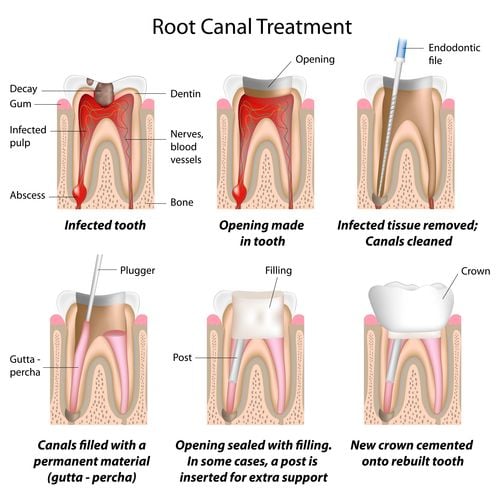
What Happens During Root Canal Treatment at Sandgate Bayside Dental?
We use advanced techniques and digital imaging to make your treatment precise, efficient, and as comfortable as possible. Here’s what you can expect:
Step-by-Step Process:
-
- Initial Consultation and Digital X-Rays:
Our dental team conducts a thorough assessment of your affected tooth and surrounding bone using advanced digital imaging. This allows us to detect infections, assess bone health, and evaluate the structure of your root canals with precision.
To ensure the most accurate diagnosis, we utilize the latest CBCT (Cone Beam CT) scan technology, which provides a 3D view of your tooth and surrounding tissues. If necessary, we can take a CBCT scan immediately during your appointment, offering a comprehensive and detailed view to aid in accurate diagnosis and treatment planning.
Our advanced imaging ensures that your root canal treatment is performed with precision, efficiency, and minimal discomfort, leading to better long-term outcomes.
- Local Anaesthesia:
We carefully numb the area to ensure you’re relaxed and comfortable throughout the procedure. - Removal of Infected Tissue:
The tooth is opened, and the infected pulp and bacteria are removed from the canals. - Cleaning and Shaping:
Using special instruments, we clean, disinfect, and shape the canals to prepare them for filling. - Filling and Sealing:
The canals are filled with a biocompatible material called gutta-percha to seal them and prevent future infection. - Final Restoration:
To protect the tooth’s structure and restore function, we often recommend placing a strong, custom-made dental crown.
- Initial Consultation and Digital X-Rays:

What to Expect After Treatment
After your root canal, it’s normal to feel mild discomfort or sensitivity for a few days. We’ll provide personalised aftercare advice to help you heal smoothly.
Post-Treatment Tips:
- Take any prescribed antibiotics or pain relief as directed.
- Avoid chewing on the treated tooth until it’s fully restored with a crown.
- Maintain good oral hygiene to keep the area clean.
- Attend your follow-up appointment to complete your crown placement.
With proper care, a root canal-treated tooth can last as long as your natural teeth.
Leading Dental Practice in North Brisbane
Experienced Dentists with a gentle approach
Reasons to Choose Sandgate Bayside Dental
The preferred Brisbane Dentist


Dental Expertise
- Dental experts with decades of experience
- Keeping you in safe hands

Trust & Faith
- Trusted by Generation of Families
- Proudly serving North Brisbane since 1992

State of the Art Dentistry
- Rotary Endodontics, Digital Radiography
- Looking after you at every step
- Cutting Edge Methods
WORKING HOURS
Our Affiliations







How Much Does Root Canal Treatment Cost in Brisbane?
Root canal costs vary based on:
- The complexity of the infection
- The number of canals in the tooth (front teeth usually have 1-2, molars have more)
- Whether a crown is required
At Sandgate Bayside Dental, we provide clear, upfront pricing with no surprises.
We accept all health funds and offer flexible payment options including interest free payment plans, Afterpay, Zip and Humm to make high-quality dental care accessible. If you need to go on a payment plan, you would need to discuss this with the front desk staff before your appointment.
For an exact quote, please call (07) 3269 2443 or book a consultation.
Alternatives to Root Canal Treatment
If a tooth is severely infected, you may wonder if there are other options.
Here’s a comparison:
| Option | Pros | Cons |
|---|---|---|
| Root Canal | Saves natural tooth, preserves bite | May require multiple visits |
| Tooth Extraction | Removes infection | Requires partial replacement (denture/implant/bridge) |
| Do Nothing | No immediate cost | Leads to worsening infection, tooth loss |
In most cases, saving your natural tooth with a root canal is the best long-term solution.
How Can I Prevent Root Canal Treatment?
Prevention is always better than cure. Here’s how you can protect your teeth:
- Brush twice daily with fluoride toothpaste
- Floss daily to remove plaque from between teeth
- See your dentist every six months for a check-up and professional clean
- Wear a mouthguard during sports to avoid trauma
- Address tooth decay and damage promptly
Emergency Root Canal Treatment Brisbane
Same-Day Relief for Severe Toothache and Infections
Dental emergencies rarely happen at a convenient time. If you’re experiencing sudden, severe tooth pain, swelling, or signs of infection, it may indicate that you need urgent root canal treatment. At Sandgate Bayside Dental, we offer emergency root canal services in Brisbane, so you can receive immediate care and avoid further complications.
When is a Root Canal an Emergency?
A root canal becomes an emergency when infection or damage inside the tooth causes:
- Intense, throbbing pain that keeps you awake at night
- Rapidly spreading swelling in your gums, face, or jaw
- A dental abscess, often felt as a painful lump or bump on the gums
- Fever or feeling generally unwell due to infection
- A tooth that has been traumatised (knocked, cracked, or chipped)
If left untreated, these infections can worsen quickly and may result in tooth loss or the infection spreading to other areas of the body. Seeking prompt dental care is crucial.
Trusted by Brisbane’s Northside
Patients from Sandgate, Shorncliffe, Brighton, Deagon, Bracken Ridge, Bald Hills, Strathpine, Clontarf, Margate, Woody Point, Scarborough, Redcliffe, North Lakes and Greater Brisbane rely on us for expert root canal care.
Can I Avoid a Root Canal?
The best way to avoid needing a root canal treatment (RCT) is through early detection and prevention. Many dental problems, like tooth decay and cracks, often develop silently without any noticeable symptoms in the beginning. By the time you feel pain, the tooth may already require more advanced treatment.
How to Reduce Your Risk of Needing a Root Canal:
✅ Attend Regular Dental Check-Ups
We recommend seeing your dentist every 6 months for a comprehensive examination and professional clean. These routine check-ups allow us to spot problems early, before they reach the nerve of the tooth.
✅ Routine Dental X-Rays
X-rays are essential for detecting hidden issues such as decay between the teeth, under old fillings, or below the gum line. Depending on your risk factors, dental X-rays are usually advised every 12 to 24 months.
✅ Protect Teeth with Large Fillings
If you have teeth with large fillings that are close to the nerve, regular monitoring is vital. Over time, these teeth can weaken, and cracks or fractures may develop, increasing the risk of infection that may lead to needing a root canal.
✅ Watch for Cracked Teeth
Cracks in teeth can occur from habits like grinding, clenching, or even biting down on hard foods. Cracks can allow bacteria to enter the inner layers of the tooth, causing infection in the pulp. Early identification of cracks through dental exams and X-rays is key to preventing complex treatments.
✅ Maintain Excellent Oral Hygiene
Daily brushing, flossing, and limiting sugary snacks and drinks help prevent decay from forming in the first place. The healthier your teeth and gums, the lower your risk of needing major dental work.
Do I Really Need a Root Canal?
Many patients wonder whether a root canal is truly necessary. The truth is, by the time a tooth needs root canal therapy, the inner pulp has often become infected or severely inflamed. Without treatment, the infection can spread, leading to more serious dental issues or even the loss of the tooth.
Warning Signs You Shouldn’t Ignore
In most cases, your tooth will give you early warning signs before it reaches the point of requiring a root canal. These symptoms may include:
- Sensitivity to hot or cold that lingers after the source is removed
- Mild to moderate discomfort when chewing
- Occasional sharp pain in a specific tooth
- Tenderness or swelling in the gums near the tooth
- A tooth that feels “different” or slightly raised when biting down
Early Action Can Save Your Tooth
If you notice any of these symptoms, it’s essential to see your dentist promptly. The earlier we assess and treat the problem, the better the chance of preserving your tooth with simpler treatments like a filling or dental crown, before infection spreads into the pulp.
Waiting too long may mean the only way to save the tooth is through root canal therapy—or worse, you may face extraction if the infection becomes too severe.
Why Prevention is Better Than Cure
When you prioritise regular dental care, small issues can often be treated with simple fillings or protective crowns, instead of more invasive procedures like root canal therapy. Early intervention saves you time, discomfort, and money while helping you maintain your natural teeth for life.
Your Best Choice for Root Canal Treatment in Sandgate
Don’t let tooth pain disrupt your life. Schedule an appointment with Sandgate Bayside Dental, the #1 dentist for root canal treatment in Sandgate, and get back to enjoying life. With our experienced team, personalized care, and commitment to delivering stunning results, you’ll leave our clinic with a confident, radiant smile. Don’t just take our word for it—check out our patient reviews to see why we’re Brisbane’s preferred dental clinic.
Frequently Asked Questions
- How painful is the RCT?
- Do I need to take time off after the treatment?
- I can only pay a certain amount every fortnight/week. Do you offer any payment options?
- Should I get my tooth taken out instead of getting an RCT?
- If I get my tooth taken out instead, what are my options to get a new tooth?
- Who is an endodontist?
- Do you have the latest equipment to perform the best quality treatment?
- I am absolutely terrified of the dentist. What can I do?
- Is Root Canal Treatment (RCT) safe for me?
- What happens if I ignore a root canal?
- What services do root canal treatment clinics in Brisbane Northside provide for persistent tooth pain?
- Where can I find emergency root canal clinics in Sandgate, Brisbane that offer same-day relief?
- How do affordable root canal treatment places in Sandgate, QLD make high-quality care accessible?
Root canal treatments have come a long way. Years ago, they had a reputation for being painful—but thanks to modern techniques and advanced technology, root canal treatment is now a safe and comfortable procedure.
Just like any other dental treatment, we carefully numb the area to keep you comfortable throughout. Once the tooth is numb, a root canal feels very similar to having a filling, but it may take a little longer to complete.
With decades of experience, our dentists at Sandgate Bayside Dental are known for being exceptionally gentle, helping even our most nervous patients feel at ease during treatment.
If you’re feeling anxious or have concerns about discomfort, we can also discuss sedation options to help make the experience as smooth as possible.
No, you generally won’t need to take time off after your root canal treatment. Most patients can return to work or their usual activities on the same day.
You may experience some residual numbness for a few hours after the procedure, which is normal and will wear off gradually. In some cases, there might be mild post-operative discomfort, but this is usually well managed with simple over-the-counter pain relief.
Our team will provide you with personalised aftercare instructions to help you stay comfortable following your appointment.
Yes, we do! At Sandgate Bayside Dental, we believe everyone deserves access to quality dental care, which is why we offer flexible interest-free payment options to suit your budget.
We’ve partnered with Denticare to provide simple payment plans.
We also accept Afterpay and Zip Pay, Humm, allowing you to split your payments with no extra fees or interest.
Our team is happy to guide you through the best option to make your treatment more manageable.
This is something you should discuss with Sandgate Dentist after a full assessment. In most cases, saving your natural tooth with a root canal is preferred, as removing a tooth can lead to problems like shifting teeth, bite changes, and bone loss.
Tooth removal may be recommended if the tooth is too badly damaged or cannot be restored. However, it’s important to consider the extra cost and effort involved in replacing a missing tooth with options like a dental implant, bridge, or denture.
If you choose to have your tooth removed, there are a few common ways to replace it and restore your smile:
- Dental Implant: A strong, long-term solution that looks and feels like a natural tooth.
- Dental Bridge: A fixed option that uses nearby teeth to support the replacement tooth.
- Denture: A removable appliance to replace one or more missing teeth.
Our expert dentists will discuss the best option for you based on your needs, budget, and overall oral health. Replacing a missing tooth helps protect your bite, maintain your smile, and prevent future dental problems.
Though most of the RCTs can be performed comfortably by our dentists, at times, you may need to see a specialist to get a more complicated RCT performed. You would be referred by your dentist in that case to an Endodontist (Root Canal Specialist)
Yes, absolutely. At Sandgate Bayside Dental, we are proud to deliver world-class dental care using the latest technology available. We’ve been part of the community for many years and remain committed to offering our patients the benefits of state-of-the-art equipment and advanced techniques.
For root canal treatments and other procedures, we use:
- Digital Radiographic Imaging for clear, low-radiation X-rays
- Rotary Endodontics for faster, more precise root canal procedures
- Apex Locator for highly accurate measurements
- 3D CT Scan – CBCT at our practice can help visualise the teeth in 3d and improve the diagnosis and treatment of your tooth/teeth
- Intra-Oral Cameras so you can see what we see and better understand your treatment
As the trusted dental clinic for Sandgate, Shorncliffe, Brighton, Deagon, Bracken Ridge, Boondall, Taigum, Woody Point, Clontarf, Margate, and Redcliffe, we’re proud to provide high-quality dental care with a personal touch.
At Sandgate Bayside Dental, we are known as the gentle dentists of Brisbane, and we take extra care to support patients who feel nervous or anxious about dental treatment, including root canal therapy.
For those who experience dental anxiety, we offer two effective sedation options to help you feel completely at ease during your procedure:
-
Oral Sedation: A prescribed medication taken before your appointment to help you feel calm and relaxed. Oral sedation is ideal if you feel mild to moderate anxiety and prefer a simple, no-fuss option to ease your nerves.
-
IV Sedation (Sleep Dentistry): For patients with higher anxiety or those undergoing longer treatments, we can arrange IV sedation with a qualified sedationist. This provides a deeper level of relaxation, and many patients feel as though they are lightly sleeping while still being conscious and able to respond.
Both options require planning ahead, so please speak with our team before your appointment if you feel sedation may help you.
Your comfort is always our priority. We’re here to ensure your root canal treatment is as smooth and stress-free as possible.
Yes, root canal treatment (RCT) is a very safe and common dental procedure. It is designed to remove infection from inside the tooth, relieve pain, and save your natural tooth. With modern techniques and strict infection control measures, root canals are highly effective and have a strong success rate.
Before starting treatment, your dentist will assess your overall health, dental condition, and any medical history to ensure that a root canal is suitable and safe for you. For patients who may feel nervous, we also offer sedation options, such as oral sedation or IV sedation, to help you feel comfortable during the procedure.
Ignoring a needed root canal allows the infection inside your tooth to worsen. Over time, this can lead to:
- Severe, ongoing tooth pain
- A dental abscess (swelling and pus around the tooth)
- Spread of infection to surrounding teeth, jawbone, or even other parts of the body
- Tooth loss, often leaving you needing extraction and replacement (like an implant or bridge)
Delaying treatment can also make the problem more complex and costly to fix. A root canal is designed to remove the infection, save your natural tooth, and protect your long-term oral health.
Sandgate Bayside Dental offers expert root canal treatment clinics in Brisbane Northside, helping relieve persistent tooth pain through advanced imaging, precise cleaning, and restoration of infected teeth.
At Sandgate Bayside Dental, the emergency root canal clinics in Sandgate, Brisbane, provide urgent care for throbbing pain, swelling, or infection, with same-day attention.
Sandgate Bayside Dental is one of the affordable root canal treatment places in Sandgate, QLD, offering clear pricing, health fund acceptance, and flexible payment options like Afterpay, Humm and Zip.
About Us
For over 30 years, our practice has been caring for people from Sandgate, Shorncliffe, Brighton, Deagon, Bracken Ridge, Bald Hills, Boondall, Taigum, Fitzgibbon, Woody Point, Clontarf, Margate and Redcliffe and other surrounding areas.
Our main priority is to provide affordable, gentle and quality dental care to the Sandgate and surrounding communities.
Contact Us
Open Mon-Fri, plus 1st & 3rd Saturdays
© SANDGATE BAYSIDE DENTAL 2026 | PRIVACY POLICY