
- No slipping or shifting
- Eat and speak with confidence
- Implants stimulate the jawbone
- Slows bone loss over time
- Maintains facial structure
- 3D scanning on-site
- Precise treatment planning
- No external referrals needed
- Interest free payment plans
- Starting from $50/week
- Afterpay, Zip, Humm, Denticare
Implant-Supported Dentures: A Stable Alternative to Traditional Dentures
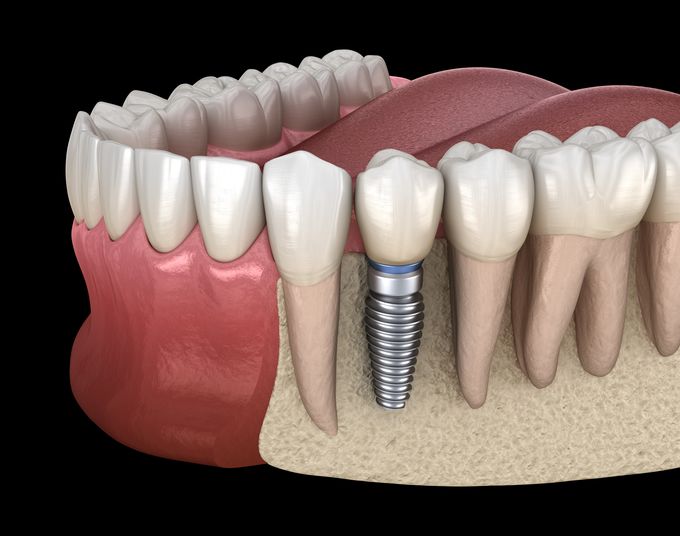
If you’re tired of dentures that shift, click, or require adhesive to stay in place, implant-supported dentures offer a fundamentally different experience. Instead of sitting on the gum, they are stabilised by dental implants placed in the jawbone — giving you the stability of implants with the coverage of a full denture.
At Sandgate Bayside Dental, Dr Vikram Bansal and our team have been helping patients across North Brisbane restore confidence in their smile, their bite, and their day-to-day comfort since 1992. We offer both fixed and removable implant-supported options, assessed and planned using our in-house CBCT 3D scanner.
Already wearing dentures? Many patients with existing dentures are suitable for implant support — even with some bone loss. A CBCT scan gives us a precise picture of what’s available and what’s possible for your specific situation.
What Are Implant-Supported Dentures?
An implant-supported denture uses between two and six dental implants as anchors, depending on your jaw and the type of restoration chosen. The denture clicks or locks onto the implants, which keeps it firmly in position throughout the day.
There are two main types:
- Removable implant-supported dentures — also called overdentures or snap-on dentures. These clip securely onto the implants and can be removed at night for cleaning. They provide significantly more stability than conventional dentures while keeping maintenance simple.
- Fixed implant-supported bridges (All-on-X) — permanently attached to the implants and only removable by a dentist. This is the closest option to having natural teeth. See our All-on-X implants page for full detail on this pathway.
Which option is right for you depends on your bone volume, the number of implants you are suitable for, and your preference for fixed vs removable. Your dentist will discuss both at your consultation.

Implant-Supported vs Conventional Dentures
| Feature | Conventional dentures | Implant-supported dentures |
|---|---|---|
| Stability | Rests on gum — can shift | Anchored to implants — fixed in place |
| Adhesive needed | Often required | No |
| Bone preservation | Bone continues to shrink | Implants stimulate bone retention |
| Chewing efficiency | Reduced — some foods difficult | Significantly improved |
| Confidence speaking | Risk of movement or clicking | Stays secure when talking |
| Longevity | Regular replacement needed | Implants last decades with care |
Am I a Suitable Candidate?
Most patients who wear conventional dentures are candidates for implant support. You may be particularly well suited if you:
- Find your current dentures loose, uncomfortable, or difficult to eat with
- Need adhesive to keep your dentures in place
- Have experienced significant bone loss from long-term denture wear
- Want a more permanent, fixed solution but are not sure if full All-on-X is right for you
- Are in reasonable general health with no uncontrolled systemic conditions
Bone loss from long-term denture wear is very common and does not automatically rule out implants. Even patients with reduced bone volume may be suitable for a smaller number of implants to support an overdenture. Our in-house CBCT scanner gives us a precise 3D picture of your jaw so we can tell you exactly what is and isn’t possible for your situation. Read more about implants and bone loss.
Concerned about the procedure? We offer IV sedation for implant procedures, administered by a dedicated sedationist. Many patients who were anxious choose us specifically for this reason.
Treatment Process — What to Expect
Consultation + CBCT scan
Assessment of your jaw, bone volume, and suitability. 3D imaging taken on-site to plan implant positions precisely.
Implant placement
2–6 implants placed under local anaesthetic or IV sedation. Most patients return to normal activity the following day.
Healing phase
3–6 months for osseointegration. Implants fuse with the jawbone to create a stable foundation for your denture.
Denture attachment
Your overdenture or fixed bridge is fitted and adjusted. You leave with a stable, secure set of teeth.
Frequently Asked Questions
- What is the difference between implant-supported dentures and All-on-X?
- How many implants do I need for implant-supported dentures?
- Can I convert my existing dentures to implant-supported?
- What if I’ve been told I have too much bone loss for implants?
- How much do implant-supported dentures cost in Brisbane?
- Are you open on Saturdays?
Both use implants to support a full set of teeth. The key difference is that implant-supported overdentures (snap-on dentures) are removable — they clip onto the implants and can be taken out for cleaning. All-on-X involves a fixed bridge that is permanently attached to the implants and can only be removed by a dentist. All-on-X typically uses more implants (4–6) and provides a more natural feel. Your dentist will discuss which is more appropriate based on your bone, budget, and preference.
A lower jaw overdenture typically requires 2–4 implants. An upper jaw overdenture generally needs 4 implants minimum due to lower bone density. A full fixed arch (All-on-X) uses 4–6 implants per arch. The exact number is determined by your jaw anatomy and bone volume, assessed via CBCT scan at your consultation.
In many cases yes. If your existing dentures are well-fitting, it may be possible to modify them to click onto implants once placement is complete. In other cases new dentures are made to fit the implants precisely. Your dentist will assess your current dentures at your consultation and advise on the most practical and cost-effective pathway.
Bone loss from long-term denture wear is extremely common and does not automatically rule out implant-supported dentures. A smaller number of implants in areas with better bone can still support a stable overdenture. Some patients who have been told elsewhere they aren’t suitable find options available after a proper 3D assessment. Read more about implants and bone loss.
Costs vary depending on the number of implants required, the type of denture, and whether any preparatory procedures are needed. We provide a detailed written quote at your consultation before any treatment begins. Payment plans from $50/week are available through Afterpay, Zip, Humm and Denticare. Call us on 07 3269 2443 to discuss your situation.
Yes. We are open on the 1st and 3rd Saturday of each month, 8:00 AM – 1:00 PM. Call us on 07 3269 2443 to book your consultation.
About Us
For over 30 years, our practice has been caring for people from Sandgate, Shorncliffe, Brighton, Deagon, Bracken Ridge, Bald Hills, Boondall, Taigum, Fitzgibbon, Woody Point, Clontarf, Margate and Redcliffe and other surrounding areas.
Our main priority is to provide affordable, gentle and quality dental care to the Sandgate and surrounding communities.
© SANDGATE BAYSIDE DENTAL 2026 | PRIVACY POLICY